
How long before you can drive on new concrete?
- April 9, 2026
- Written By Levi Saunders
- Guides
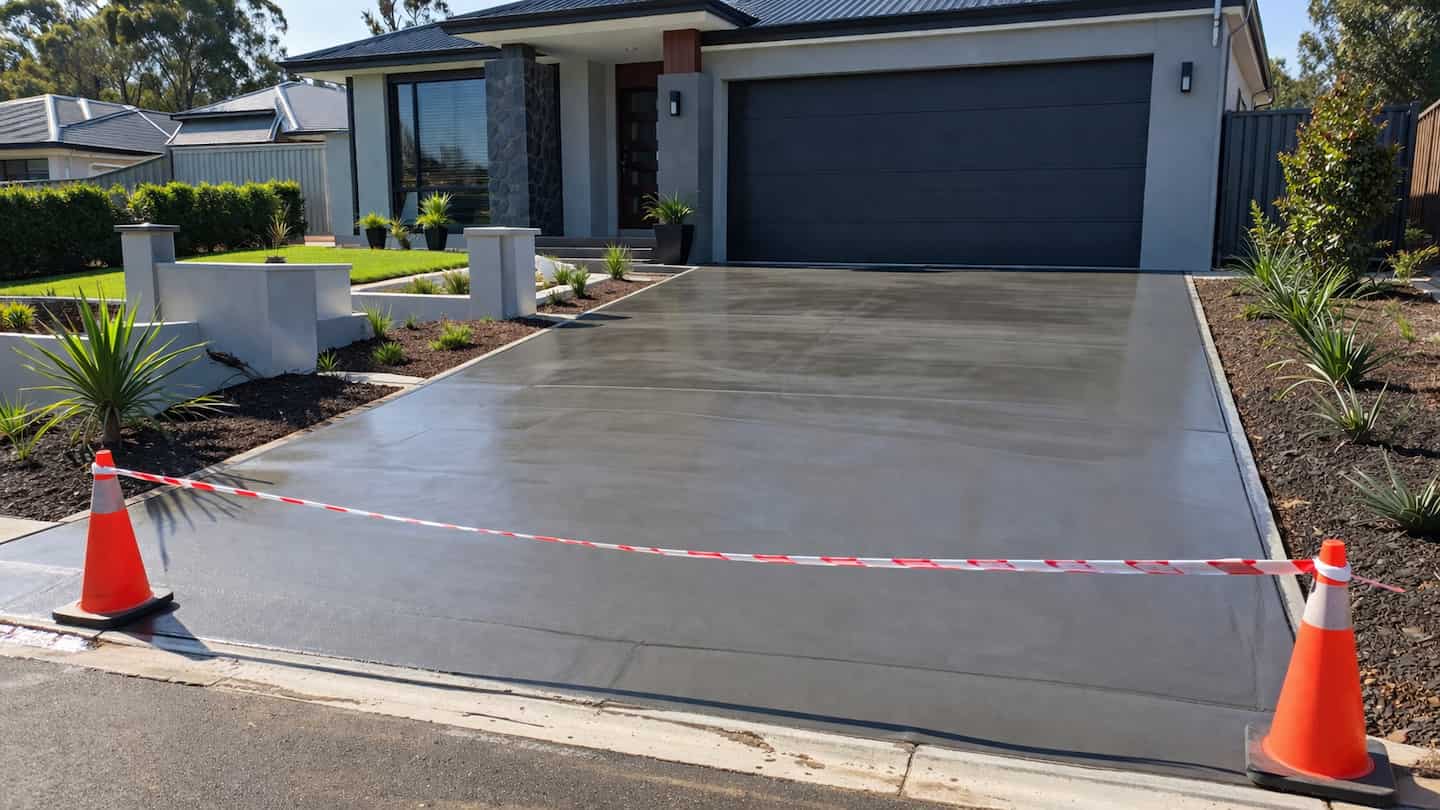
Looking for a clear answer on how long before you can drive on new concrete? In most cases, you can walk on it within 24 to 48 hours, but driving on it usually takes longer, often around 7 days depending on conditions. The exact timing comes down to the mix, weather, and how the slab has been installed.
If you’ve just had a new driveway poured, it’s important to understand that concrete doesn’t fully harden overnight. It continues to gain strength over time. Walking on it, parking on it, and allowing heavier vehicles are all different stages, and getting this wrong can lead to marks, cracks, or long-term damage.
If you’re planning a new driveway or want to understand what to expect, take a look at our concrete driveways service to see how we approach each project and set things up for long-term performance.
Quick Summary
- You can usually walk on new concrete after 24 to 48 hours
- Driving on it takes longer, often around 7 days for standard vehicles
- Heavy vehicles like utes, trailers, or delivery trucks need more time again
- Concrete continues to gain strength well beyond the first week
- Hot, cold, or wet weather can all affect how quickly it’s ready
- Sealing should only be done at the right stage to avoid issues later
How long before you can walk on new concrete?
In most cases, light foot traffic is fine after 24 to 48 hours. This is when the surface has set enough to handle gentle use without leaving marks.
That said, “set” doesn’t mean fully hardened. The concrete is still gaining strength underneath, so it’s important to avoid dragging objects, sharp impacts, or anything that could damage the surface early on.
For a new concrete driveway, this early stage is where care matters most. We don’t believe in cutting corners, and the way the slab is handled in the first couple of days plays a big role in how it performs long term.
How long before you can drive on new concrete?
Driving on new concrete takes longer than walking on it. In most cases, you should allow around 7 days before putting a standard car on your new driveway.
Even at this point, it’s still not fully cured. The concrete has gained enough strength for light vehicle use, but it’s important to treat it carefully in the early stages.
A few practical tips:
- Avoid turning your wheels while the car is stationary, as this can scuff or mark the surface
- Try not to park in the exact same spot every time during the first couple of weeks
- Keep heavier vehicles off the driveway until you’ve been advised it’s safe
Rushing this stage is one of the most common causes of early damage. A bit of patience upfront helps ensure your driveway stays looking clean and performs properly long term.
What affects how quickly concrete is ready for vehicles?
Not all concrete is the same, and neither is every job. The time it takes before you can safely drive on your new driveway can vary depending on a few key factors.
Here’s what makes the biggest difference:
- Weather conditions
Heat, cold, and moisture all affect how concrete gains strength. Warm weather can speed things up, while cooler conditions slow it down. - Concrete mix
Different mixes are designed for different purposes. Some are made to gain strength faster, while others prioritise long-term durability. - Slab thickness
Thicker slabs generally take longer to fully cure, especially if they’re designed to handle heavier loads. - Ground preparation
A properly prepared base helps the concrete perform as expected. Poor prep can lead to movement or cracking, even if the surface looks fine early on. - Exposure and location
Areas that get full sun, shade, or wind can cure differently across the same slab.
We take all of this into account as part of how we do it, making sure each driveway is set up properly from the ground up so it performs the way it should over time.
Hot weather, rain, and cold conditions in Perth
Perth’s conditions can have a big impact on how your concrete behaves in the first few days. It’s not just about how fast it dries on the surface. What matters is how it cures underneath.
- Hot weather
Concrete can dry quickly in the heat, but that doesn’t mean it’s ready for traffic. If it dries too fast, it can actually affect long-term strength and lead to surface issues. - Rain and moisture
Rain during or just after pouring can interfere with the finish and weaken the surface if not managed properly. - Cooler weather
Concrete takes longer to gain strength in cooler conditions, which means you may need to wait longer before driving on it.
This is why timing advice should never be generic. Every job is different, and installer guidance should always reflect the actual conditions on the day.
When can heavier vehicles use new concrete?
Heavier vehicles need more caution than a standard car. While you might be able to drive on your new concrete after about a week, that doesn’t automatically mean it’s ready for higher loads.
This includes:
- Utes and 4WDs
- Trailers and caravans
- Skip bins and delivery trucks
- Removalist vehicles or work vans
These put more pressure on the surface, especially when turning or sitting in one spot for longer periods.
As a general rule, it’s best to give the concrete more time before allowing heavier vehicles on it. In some cases, this could be a couple of weeks or longer depending on the job.
If you’re planning to have trades, deliveries, or equipment on your driveway soon after installation, it’s always worth checking first. A bit of planning here can prevent unnecessary damage and help your concrete hold up properly over time.
How long does concrete take to fully cure?
Concrete doesn’t stop changing after a few days. While it may be ready for light use within the first week, it continues to gain strength well beyond that.
In simple terms:
- The first 24 to 48 hours is when the surface sets
- Around 7 days is when it’s often ready for light vehicle use
- Full curing takes much longer, with strength continuing to build over several weeks
This is why early use needs to be managed carefully. Just because the surface feels hard doesn’t mean it has reached its full strength.
A good way to think about it is like letting paint dry. It might feel dry to the touch quickly, but it still needs time to properly harden underneath. Concrete works the same way, just over a longer period.
When should new concrete be sealed?
Sealing is an important step, but timing matters just as much as the product used. Sealing too early can trap moisture in the concrete, which can lead to issues with appearance and long-term performance.
In most cases, sealing is done once the concrete has had enough time to cure properly. The exact timing depends on the finish, conditions, and the type of sealer being used.
A few key points to keep in mind:
- Don’t rush sealing just because the surface looks dry
- Sealing too early can cause cloudiness or reduce effectiveness
- Different finishes may require different sealing timelines
- Proper sealing helps protect against stains, wear, and weather
If you want a step-by-step breakdown, you can read more in our guide on how to seal a concrete driveway.
Common mistakes to avoid with new concrete
Most early issues with concrete come down to timing. A few simple mistakes can leave marks or reduce how well your driveway performs long term.
Here’s what to avoid:
- Driving on it too early
This is the most common issue and can lead to surface damage or early cracking. - Allowing heavy vehicles too soon
Utes, trailers, and delivery trucks can put extra stress on concrete that hasn’t built enough strength yet. - Turning wheels while stationary
This can scuff or twist the surface, especially in the first couple of weeks. - Sealing too early
Trapping moisture can affect both the look and durability of the finish. - Assuming hot weather means it’s ready
A dry surface doesn’t mean the concrete underneath has properly cured. - Ignoring installer advice
Every job is different. The timing should always be based on your specific driveway, not a general rule.
If you’re still exploring options or planning your project, take a look at our concrete services to see what’s possible for your home.
Need advice on your new driveway?
Every job is a bit different, and the right timing can vary depending on the mix, weather, and how your driveway was installed. If you’re unsure when it’s safe to drive on your concrete or allow heavier vehicles, it’s always best to check first.
We listen to our clients and give clear, practical advice based on your specific project. If you’ve recently had work done or you’re planning a new driveway, contact us for straightforward guidance and an obligation-free quote.